Introduction
Not all MDF is equal when water is involved. Standard MDF — a composite panel made from compressed wood fibres and resin — absorbs moisture rapidly, swells irreversibly, and loses its structural integrity. Moisture-resistant MDF, commonly called green MDF because of its characteristic green tint, is engineered to withstand relative humidity up to around 85%. It costs roughly 20–30% more than standard MDF. The real question is: does your project actually need it, or are you spending money on a specification that adds no value? This article gives you a clear, data-driven answer for every common use case.
What Makes Green MDF Different from Standard MDF?
Standard MDF is bonded with urea-formaldehyde (UF) resin. This resin is highly effective in dry conditions but breaks down in the presence of sustained moisture. The result: the panel swells at the edges, the core softens, and screws lose their grip.
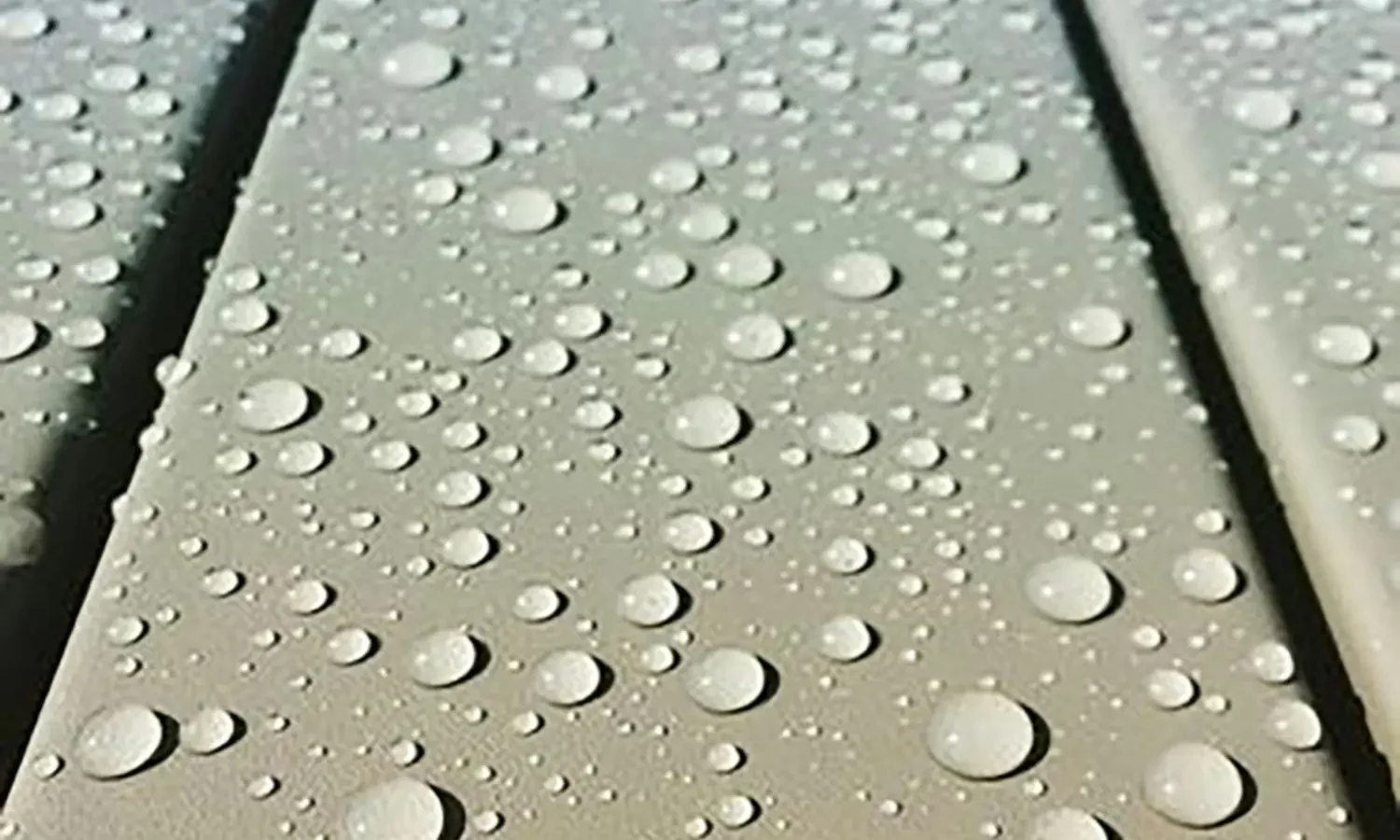
Moisture-resistant MDF uses a melamine-urea-formaldehyde (MUF) resin with added water-repellent additives — typically paraffin wax dispersed through the fibre matrix during manufacture. This hydrophobic treatment reduces water absorption by 30–50% compared to standard MDF under equivalent humidity exposure.
The green colouring is simply a dye added during production to allow instant visual identification on-site and in the warehouse. It carries no performance properties of its own.
| Property | Standard MDF | Green MDF (MR MDF) |
|---|---|---|
| Resin type | Urea-formaldehyde (UF) | Melamine-UF (MUF) |
| Density | 700–800 kg/m³ | 700–800 kg/m³ |
| Weight at 18mm | ~13.5 kg/m² | ~13.5 kg/m² |
| Max. recommended RH | ~65% | ~85% |
| Typical cost (18mm) | €12–€18/m² | €18–€28/m² |
| Direct water contact | ❌ Not suitable | ❌ Not suitable |
| Edge sealing required? | Always | Still recommended |
> Key takeaway: Green MDF tolerates high humidity — it does not tolerate immersion or standing water. The distinction matters enormously when specifying materials.
When You Should Use Moisture-Resistant MDF
Bathroom vanity units and cabinetry are the most common application. The ambient humidity in a bathroom fluctuates daily between 55% and 85% RH during use. Standard MDF carcasses in these conditions will show edge swelling within 12–18 months. Green MDF handles this cycle without degradation, provided edges are sealed with paint or edge banding before installation.
Kitchen plinths and toe kicks sit close to the floor, where condensation from temperature differentials and occasional spills create a persistently damp microenvironment. Green MDF is the industry-standard specification here.
Utility rooms and laundry rooms share the same humidity profile as bathrooms. Any carcass below worktop height should be specified in green MDF.
Painted interior doors in poorly ventilated spaces — particularly in older buildings without mechanical ventilation — benefit from MR MDF cores to prevent face-layer delamination.
One practical note on edge sealing: moisture-resistant MDF is still vulnerable at cut edges, where the fibre structure is exposed. Any panel cut to size must have its edges sealed with two coats of primer or MDF edge sealant before being installed in a humid environment. This is where most failures occur in practice — not from a specification error, but from skipping the sealing step.
When you’re cutting multiple panels for a bathroom project, planning your cuts in advance dramatically reduces exposed edge length and the amount of sealing work required. A panel cut optimization tool helps you nest pieces efficiently, minimising both waste and unnecessary cut edges.
When Standard MDF Is Perfectly Fine (And Green MDF Is Overkill)
For the majority of interior joinery projects, standard MDF delivers excellent results at a lower cost. Specifying green MDF where it is not needed inflates material costs without any functional benefit.
Living rooms, bedrooms, and hallways in a heated home stay well below 65% RH for most of the year. Standard MDF for shelving, wardrobes, wall panelling, and built-in furniture is entirely appropriate here.
Office furniture and retail fixtures in climate-controlled environments have no meaningful exposure to elevated humidity. Standard MDF is correct for these applications.
Substrates for laminate or veneer in dry spaces do not require moisture resistance — the surface finish provides its own moisture barrier in normal conditions.
A common misconception is that green MDF should be used “just to be safe” throughout a kitchen. The correct approach is zone-based:
This hybrid approach is standard practice among professional kitchen fitters. It keeps material costs rational without compromising durability where it counts.
If you are unsure about shelf deflection for loaded kitchen shelves, the shelf load calculator provides span and thickness recommendations based on your specific load.
Green MDF vs. Marine Plywood: Choosing the Right Panel for Wet Zones
When humidity levels exceed 85% RH consistently, or when direct water contact is possible — around shower trays, behind splashbacks, in boat interiors — neither standard nor green MDF is appropriate.
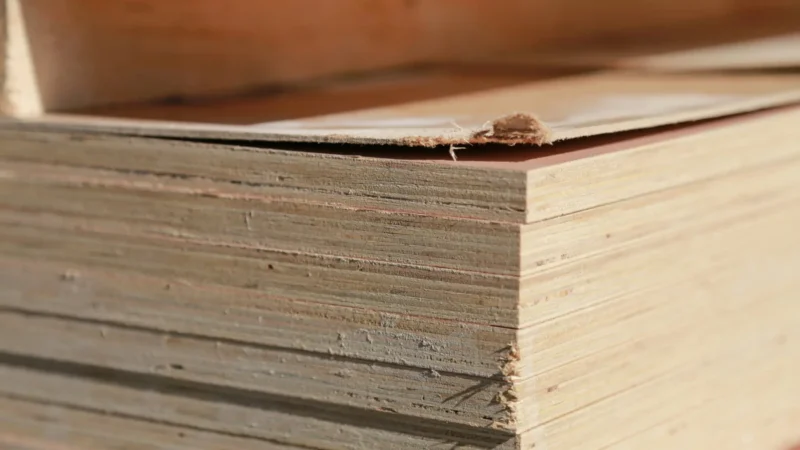
Marine plywood (EN 314-2 Class 3 bond quality) is manufactured with waterproof phenol-formaldehyde adhesive. It withstands continuous moisture exposure and direct water contact without delamination. It is significantly more expensive (€40–€80/m² for 18mm) and considerably harder to achieve a smooth painted finish on without significant preparation.
Cement board (HardieBacker or equivalent) is the correct substrate for tiled wet zones — shower walls, floors, and bath surrounds. It is dimensionally stable in water and provides a rigid, non-organic substrate for tile adhesive.
The decision framework is straightforward:
Selecting the wrong panel for a wet zone is one of the most costly mistakes in joinery — remedial work typically requires complete carcass replacement. Getting the specification right before cutting a single panel is essential.
Conclusion
Moisture-resistant MDF earns its price premium in bathrooms, kitchen plinths, utility rooms, and any painted joinery exposed to regular humidity above 65% RH. It is not a substitute for marine plywood in truly wet zones, and it is unnecessary — and wasteful — in dry interior spaces.
The practical rule: specify green MDF anywhere relative humidity regularly exceeds 65%, seal all cut edges without exception, and switch to plywood or cement board when standing water or direct splashing is involved.
Before cutting your panels, map out your cut list carefully to minimise waste and reduce the number of exposed edges that need sealing. Offcut’s free panel cutting optimizer generates efficient cutting layouts for both standard and moisture-resistant MDF sheets, with PDF and DXF export for your workshop.