Introduction
Before you build a wardrobe, a bookcase, or a kitchen unit, one question matters more than most people expect: how much will it weigh? An 8 ft (2.4 m) wardrobe in ¾ in (18 mm) MDF can exceed 175 lb (80 kg). That affects fixings, floor load, delivery logistics, and even which screws you choose.
Calculating the weight of a wood furniture piece before building is straightforward — once you know the density of your panel and a simple formula. This tutorial walks you through the full process in five steps, with no guesswork and no surprises on assembly day.
Step 1 — List Every Panel You Plan to Cut
Start with your cut list. Write down every individual piece: sides, top, bottom, shelves, back panel, doors. Include dimensions in inches for each one.
If you haven’t created a cut list yet, now is the right time. A proper cut list also lets you optimize your panel layout later to reduce waste — but that comes in step 4.
For each panel, note:
Don’t skip small pieces. A 12 × 8 in shelf in ¾ in MDF weighs around 1.4 lb — negligible alone, but ten of them add 14.3 lb to your total.
Step 2 — Apply the Wood Weight Formula
The formula is the same for every panel material:
> Weight (lb) = Length (ft) × Width (ft) × Thickness (ft) × Density (lb/ft³)
Convert all dimensions to feet before calculating. 24 in = 2 ft. ¾ in = 0.0625 ft.
Example — one side panel of a wardrobe:
Repeat this for every panel on your list. The sum gives you the raw structural weight of the carcass.
Reference Density Table
| Material | Typical Density (lb/ft³ · kg/m³) | Weight of ¾ in (18 mm) panel (lb/ft² · kg/m²) |
|---|---|---|
| MDF | 44–50 (705–800) | ~2.8 (13.7) |
| Plywood (standard) | 34–41 (545–655) | ~2.0 (9.8) |
| Chipboard / Particleboard | 37–44 (595–705) | ~2.4 (11.7) |
| OSB 3 | 36–41 (575–655) | ~2.2 (10.7) |
| Solid pine | 30–34 (480–545) | ~1.9 (9.3) |
Use the mid-range value unless your supplier provides a specific sheet weight. For precision projects, check the panel datasheet.
Step 3 — Add Hardware Weight
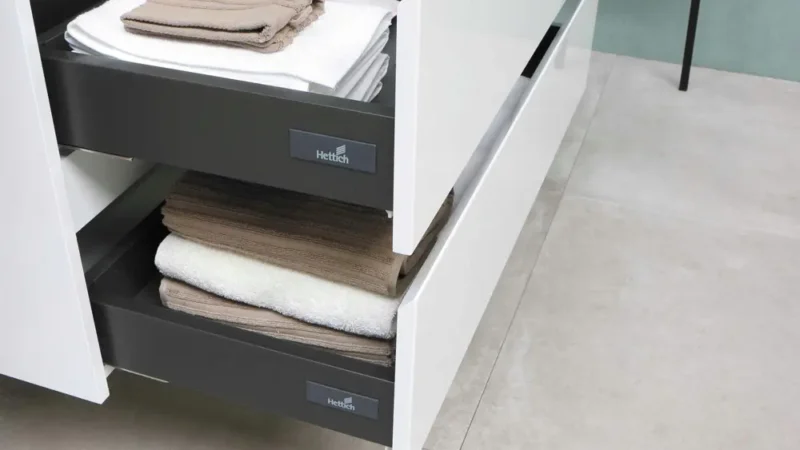
Panels alone don’t tell the full story. Hardware adds meaningful mass to any furniture piece.
A rough allowance of 5 to 10% of the panel weight covers most standard builds. For hardware-heavy furniture (soft-close drawers, full-extension slides, heavy hinges), use 10–15%.
| Hardware type | Approximate weight |
|---|---|
| Pair of concealed hinges | 3.5–5.3 oz |
| Full-extension drawer slide (pair) | 14–25 oz |
| Adjustable shelf pin (×4) | ~1.4 oz |
| Flat-pack cam lock + dowel (×8) | ~4.2 oz |
A wardrobe with three pairs of hinges, two drawer slide sets, and eight cam locks adds roughly 3.3–4.4 lb — not critical for weight estimation, but worth including if you’re specifying fixings or calculating floor loads.
Step 4 — Calculate Total Weight and Check Structural Implications
Sum all panel weights and add your hardware estimate. That’s your finished furniture weight — empty, before contents.
Now apply a quick sanity check:
If your total weight surprises you, this is the moment to reconsider your material. Switching from ¾ in MDF to ¾ in plywood on a wardrobe carcass saves roughly 25–30% of panel weight — with comparable rigidity for most applications. You can compare material weights instantly with the Offcut wood panel weight calculator.
Step 5 — Use a Calculator to Speed Up the Process
Doing this by hand for a 20-piece cut list takes 10–15 minutes and risks arithmetic errors. An online calculator reduces that to under two minutes and removes the unit-conversion mistakes that trip up most DIYers.
The Offcut wood weight calculator lets you enter panel dimensions and material type, then returns the weight per panel and the total — instantly. It covers MDF, plywood, chipboard, OSB, and solid wood species.
Once you know your weights, the next step is optimizing your cut layout to minimize waste. Offcut’s online panel cutting optimizer takes your cut list and generates an efficient layout across your full sheets — reducing offcuts and saving material cost.
Practical Example — 3-Shelf Bookcase in ¾ in Plywood
To make this concrete, here’s a complete weight calculation for a simple freestanding bookcase:
A bookcase you can move alone. Load it with books — average paperback weighs 10 oz — and 50 books add 33 lb. Plan accordingly.
Conclusion
Calculating furniture weight before building takes five minutes and prevents expensive mistakes. The formula is simple: multiply volume by density for each panel, sum the results, add hardware. Use reference densities or check your panel datasheet for precision.
If you want to run the numbers in under two minutes — without converting units manually — the Offcut wood weight calculator handles the full calculation for MDF, plywood, chipboard, OSB, and solid wood. Enter your dimensions, pick your material, get your answer.
Ready to turn that weight-approved design into an optimized cut plan? Plan your cuts with Offcut and reduce panel waste before you buy a single sheet.