Introduction
When planning a woodworking project, weight matters more than most beginners expect. Whether you’re building furniture, shelving, or cabinets, choosing between MDF and plywood can significantly impact how easy your panels are to handle, transport, and install. The question “is MDF heavier than plywood?” comes up constantly among makers and professional carpenters alike. The short answer is yes — MDF is generally heavier than plywood of the same size and thickness. But the full picture is more nuanced. Density varies by product, grade, and manufacturer. Understanding these differences helps you make smarter decisions and avoid unpleasant surprises on the job site or in your workshop.
Why MDF Is Denser Than Plywood
The weight difference between MDF and plywood comes directly from how each product is manufactured. MDF is produced by breaking down wood residuals into fine fibers, then combining them with wax and resin binders under high heat and pressure. The result is an extremely homogeneous panel with no grain direction and very few air pockets. That density is what makes MDF so smooth and easy to machine — but it also makes it heavy.
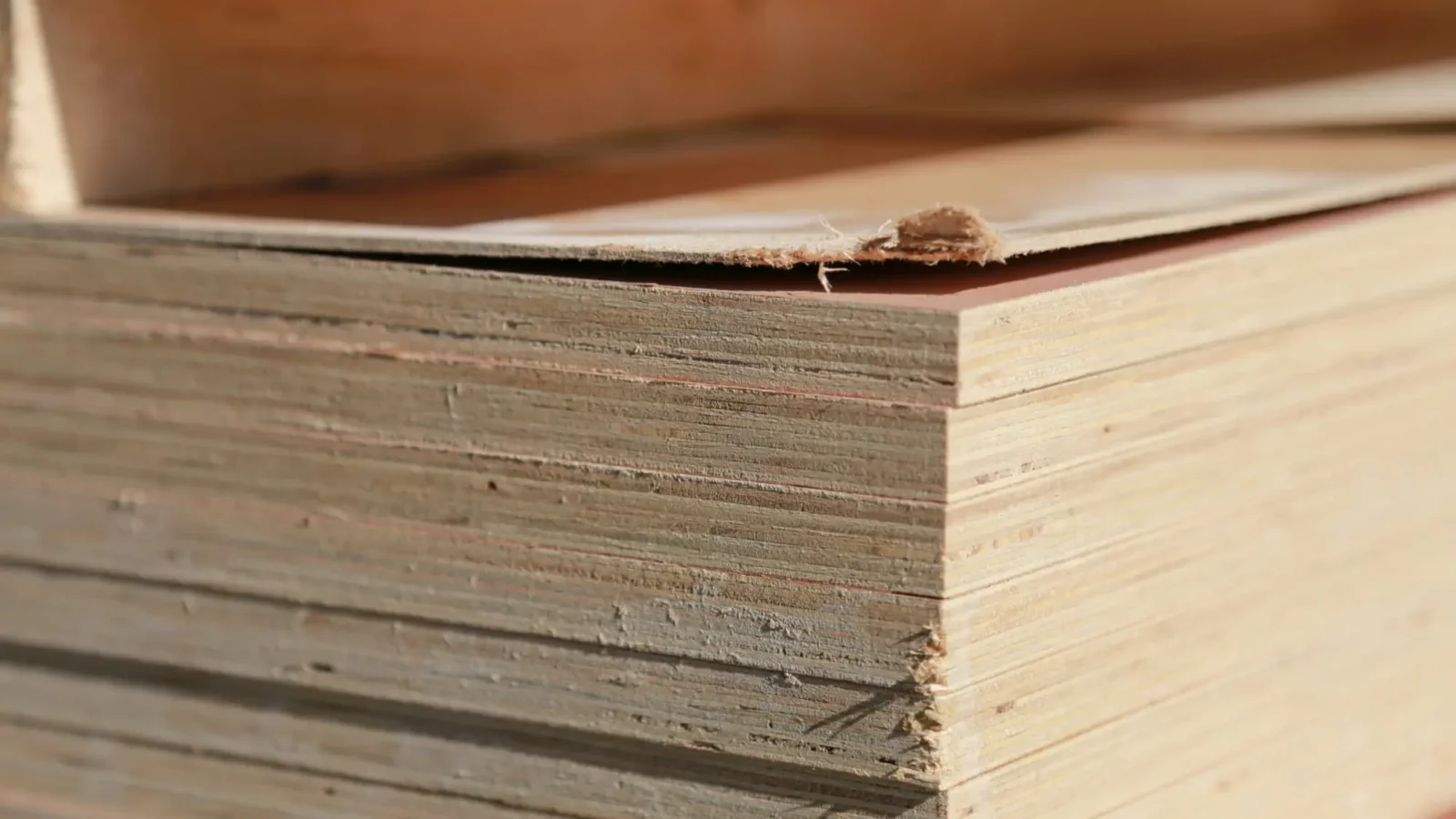
Plywood, on the other hand, is made by gluing together thin layers of wood veneer, each one rotated 90° relative to the last. This cross-grain construction creates structural strength, but the layers still contain natural wood fibers with their inherent porosity. The result is a lighter panel that retains more dimensional stability under moisture changes.
There’s no “better” material in absolute terms. The choice depends on your project requirements, your tolerance for weight, and the load-bearing expectations of the finished piece.
Density and Weight Comparison Table
The most reliable way to compare MDF and plywood is to look at their typical density values and calculate the actual weight per sheet. Density is expressed in kilograms per cubic meter (kg/m³), and from there, you can compute the weight of any panel size mathematically.
The formula is simple: Weight (kg) = Length (m) × Width (m) × Thickness (m) × Density (kg/m³)
Here’s a reference table for standard 2440 × 1220 mm sheets at common thicknesses:
| Panel Type | Density (kg/m³) | 12mm sheet weight | 18mm sheet weight | 25mm sheet weight |
|---|---|---|---|---|
| Standard MDF | ~750 kg/m³ | ~26.8 kg | ~40.2 kg | ~55.8 kg |
| Moisture-resistant MDF | ~780–800 kg/m³ | ~27.8 kg | ~41.7 kg | ~57.9 kg |
| Structural Plywood (Softwood) | ~500–540 kg/m³ | ~18.9 kg | ~28.4 kg | ~39.4 kg |
| Hardwood Plywood (Birch) | ~650–700 kg/m³ | ~24.4 kg | ~36.6 kg | ~50.8 kg |
These are indicative values. Real-world weights vary depending on the wood species used, manufacturing standards, and moisture content at the time of measurement. Always check the technical data sheet from your supplier for precise figures.
Notice that birch plywood — a premium hardwood-faced panel common in furniture and shop joinery — narrows the gap significantly with standard MDF. This is an important nuance that many online comparisons overlook.
Practical Impact on Your Projects
Understanding the weight difference between MDF and plywood isn’t just an academic exercise. It has direct consequences for your workflow, your health, and your structural calculations.
Handling and transport: A full sheet of 18mm MDF weighs around 40 kg. Moving several sheets alone is physically demanding and risks back injury. Plywood sheets at the same thickness save you roughly 10–12 kg per board — meaningful when you’re unloading a van or climbing stairs on a kitchen installation.
Structural load: If you’re designing a bookshelf, wall-mounted cabinet, or storage unit, the weight of the panels themselves contributes to the total load on fixings and supports. This is especially critical for wall-hung furniture. Heavier panels require more robust fixings, and the cumulative weight of shelves and carcases adds up fast.
Floor loading: In renovation projects with older buildings, knowing the weight of your materials can also inform whether additional floor reinforcement is needed. A large built-in wardrobe in MDF can easily reach 200–300 kg before you add any contents.
To make these calculations easier, use the wood panel weight calculator from Offcut. You can input your panel type, dimensions, and quantity to get an instant total weight estimate — helpful when planning deliveries or checking load limits.
Cutting Optimization: Why Weight Awareness Changes Your Sheet Layout
Once you’ve decided on your material, the next challenge is making the most of every sheet. Whether you’re working with MDF or plywood, minimizing offcuts directly reduces the weight of waste you need to handle and dispose of. Fewer waste panels means fewer trips to the skip and lower material costs.
This is where a dedicated cutting plan calculator becomes genuinely useful. Rather than sketching layouts by hand or relying on intuition, you input your sheet dimensions, your required parts, and the tool computes the most efficient nesting arrangement automatically. For projects using heavy MDF sheets, smart cutting layouts also reduce the number of full sheets you need to buy and carry.
Here’s a quick comparison of when each material makes more practical sense:
Conclusion
MDF is heavier than standard construction plywood — that’s a reliable rule of thumb supported by density figures. With MDF averaging around 750 kg/m³ versus plywood’s 530 kg/m³, the weight difference across a full project can be substantial. But the comparison isn’t always straightforward. Hardwood plywoods like birch close the gap considerably, and moisture-resistant MDF variants sit even heavier than standard boards.
The smartest approach is to calculate panel weights before purchasing, factor them into your structural planning, and optimize your cutting layout to reduce waste. Use the free wood panel weight calculator to estimate your material weights accurately, and plan your sheet cutting directly with Offcut’s free online cutting optimizer — no registration required, results in seconds. Your back (and your budget) will thank you.
Offcut tools to go further
- 📊 Wood weight calculator — estimate the mass of your panels instantly, before assembly or transport.
- 🪵 Offcut app — cutting plan — generate an optimised cutting plan in a few clicks.